
If you're considering becoming a Pilates teacher, you've probably already discovered something surprising:
Not all teacher training programs are created equal.
At first glance, many programs seem similar. They all promise certification. They all teach exercises. They all offer some version of anatomy, movement principles, and practical training.
But once you start looking closer, the differences can be significant.
And those differences can have a profound impact on your confidence, your skills, and ultimately your success as a teacher.
Whether you're hoping to teach professionally, deepen your own practice, or simply learn more about the human body and movement, choosing the right teacher training program is one of the most important decisions you'll make.
Here are some of the key things to look for.
1. A Strong Foundation in Anatomy
Most people think learning Pilates is about learning exercises.
It isn't.
Learning exercises is actually the easy part. The real skill lies in understanding why you're choosing an exercise, who it is appropriate for, and how to adapt it when the person in front of you needs something different. This is where anatomy becomes invaluable.
A quality teacher training program should provide a solid understanding of functional anatomy, biomechanics, movement patterns, and common postural compensations. More importantly, it should connect anatomy directly to movement rather than teaching it as a disconnected academic subject.
The goal isn't to memorize muscles.
The goal is to understand how bodies move.
2. A Program That Allows Time for Learning
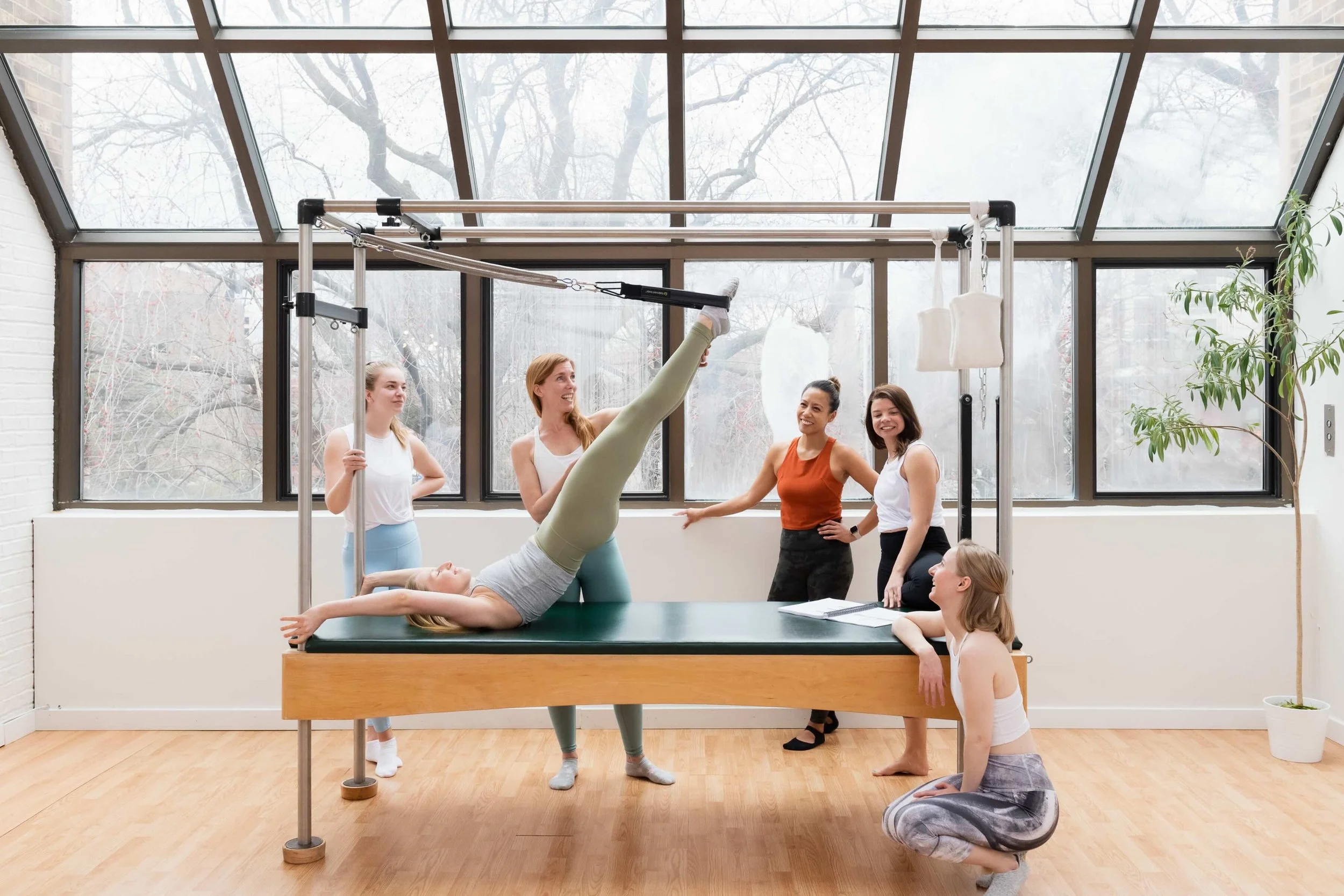
This may be one of the most important factors to consider. Learning to teach Pilates takes time. Not because the exercises are difficult to memorize, but because teaching is a skill that develops through repetition, reflection, and practice.
Be cautious of programs that promise certification over a single weekend or a handful of intensive days.
While these programs may provide valuable information, it is difficult to truly develop teaching skills without time to absorb, practice, and integrate what you've learned.
The strongest teacher training programs are structured to allow space between training days. Students learn new material, practice it, teach it, make mistakes, ask questions, and return ready for the next layer of learning.
There is a reason apprenticeships have existed for centuries. Learning happens through doing.
In our experience, a comprehensive Mat Pilates Teacher Training should include at least 100 hours of combined instruction, practice teaching, observation, personal practice, and independent study. A comprehensive Reformer Teacher Training should include at least 150 hours. More isn't always better, but enough time is essential. Learning requires exposure, practice, reflection, and repetition. A program should be structured to allow students to absorb material gradually, rather than overwhelming them with information they have little opportunity to apply.
The goal isn't simply to finish the program….. the goal is to become a confident, capable teacher when you do.
3. A Comprehensive Exercise Repertoire
A strong training should teach far more than a handful of exercises. Students should gain a deep understanding of foundational movements, progressions, regressions, modifications, and advanced variations. More importantly, they should learn the purpose behind each exercise. What is it designed to accomplish? What muscles are working? What common compensations might appear? How can it be modified for different bodies and abilities?
The best programs teach critical thinking, not memorization.
4. Opportunities to Practice Teach
This is one of the most important, and often overlooked, elements of teacher training. You can understand anatomy. You can know every exercise in the manual. You can pass a written exam….and still feel completely unprepared to teach a real human being.
Teaching is a skill. Like any skill, it develops through practice.
Look for programs that include meaningful practice teaching requirements and opportunities to receive feedback throughout the process.
In Reformer Teacher Training, every trainee should have access to their own reformer during practical training sessions. If trainees are sharing equipment, they are inevitably spending part of the training observing rather than moving, practicing, and learning. Smaller cohorts allow for more individualized feedback, more opportunities to ask questions, and more hands-on experience throughout the program.
When evaluating a training, ask about the student-to-equipment ratio, the maximum cohort size, and how much individual attention trainees receive during the practical portions of the course.
Many aspiring teachers discover that their greatest growth happens not while studying, but while standing in front of another person and learning how to communicate movement effectively.
5. Learn From Experienced Teachers
Who is teaching the teacher training?
This is a question many prospective trainees forget to ask.
A great teacher trainer doesn't just know the Pilates exercises. They have years of experience working with different bodies, different injuries, and different learning styles. They have taught hundreds, often thousands, of clients and can draw upon real-life examples to help students understand not just what to do, but why.
Experienced teachers have seen common mistakes before. They've navigated challenging client situations. They've adapted exercises for countless injuries and movement limitations. They can answer the deeper questions that inevitably arise during training.
Someone who has only been teaching for a short time/a few years may be an excellent instructor, but they may not yet have the breadth of experience needed to guide future teachers through the complexities of teaching.
One of the best things you can do before enrolling is to take a class with the teacher trainer. In fact, take several if you can.
Experience their teaching style.
Notice how they communicate.
Observe how they work with different bodies in the room.
After all, if you're considering spending months learning from someone, it's worth knowing who your teacher will be.
6. Training for Real Bodies, Not Perfect Bodies
In the real world, very few clients arrive with ideal posture, perfect movement patterns, and no injuries. They arrive with histories. They arrive with limitations. They arrive with goals, fears, and unique needs.
A quality teacher training should prepare you to work with a wide variety of populations, including individuals with common injuries, joint replacements, osteoporosis, scoliosis, chronic pain, and other movement considerations. One question we encourage every prospective trainee to ask is:
"How do you teach injuries and special populations within the core training?"
Even if a program offers advanced courses later, students should leave their foundational training with at least an introduction to common injuries, movement restrictions, and modifications. When you begin teaching, you won't only encounter healthy, athletic bodies. You'll work with people experiencing back pain, osteoporosis, joint replacements, chronic pain, and a wide variety of movement challenges. No entry-level training can cover every condition in depth. However, graduates should understand basic contraindications, common modifications, and when to refer out to other healthcare professionals.
A strong teacher training program prepares students for the reality of the clients they are most likely to encounter.
7. A Clear Path to Certification
Before enrolling, make sure you understand exactly what is required to complete the program. How many classroom hours are included? How many practice teaching hours are required? How much personal practice is expected? How long does the certification process typically take?
A quality certification process should also include both written and practical examinations. Written exams help ensure students understand anatomy, principles, and theory. Practical exams assess something equally important: the ability to teach.
Can the student communicate clearly? Can they observe movement effectively? Can they modify appropriately? Can they create a safe and effective experience for their clients?
Teaching Pilates is both an intellectual and practical skill. A certification process should evaluate both.
Clear expectations help students plan for success and ensure they have enough time to absorb and apply the material effectively.
8. Ongoing Support Beyond Graduation
Graduation is not the end of learning. In many ways, it's the beginning.
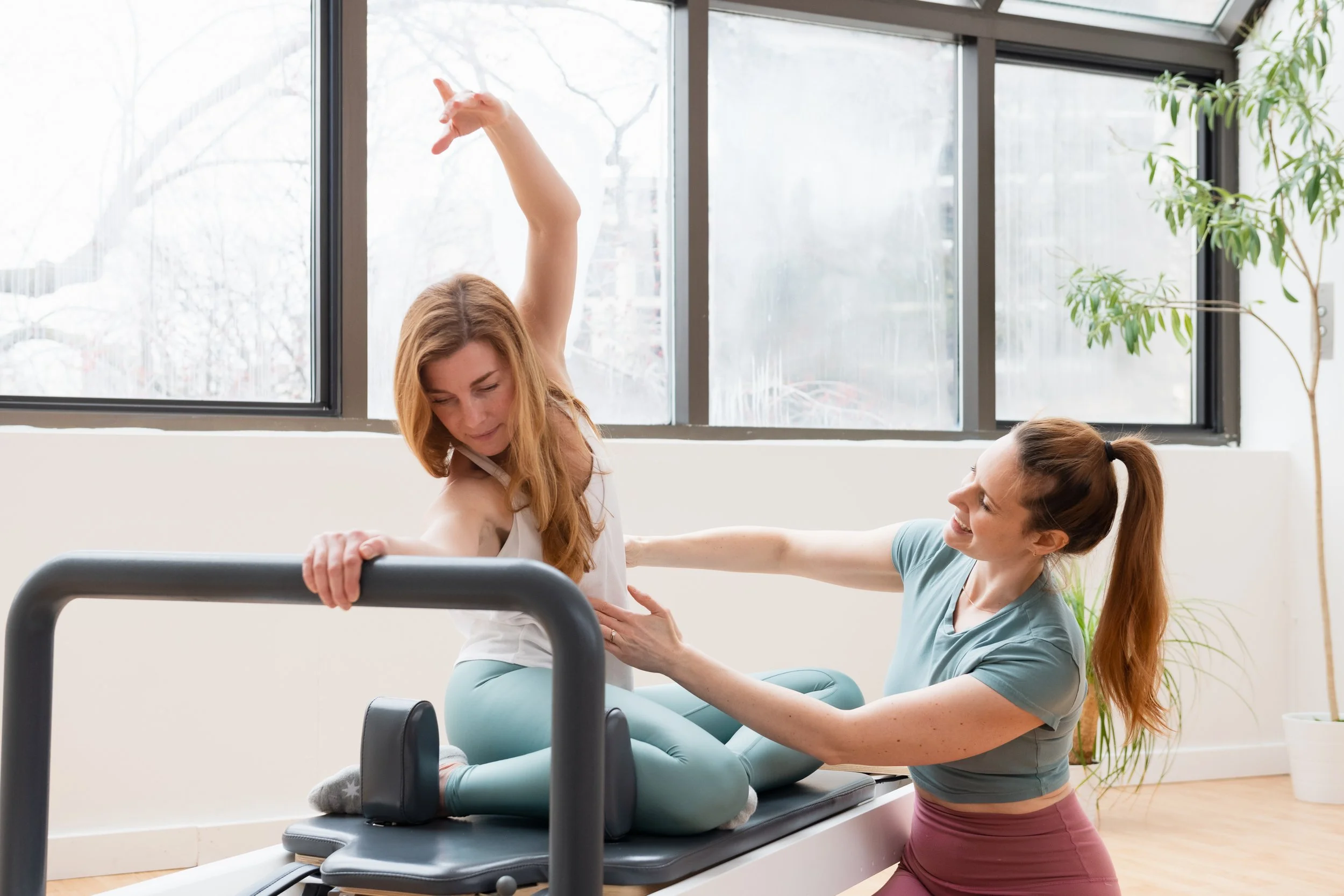
The first year of teaching is often when the deepest learning occurs. Questions arise. Challenges emerge. New situations appear that were never covered in exactly the same way during training. Look for programs that foster ongoing learning through mentorship, continuing education opportunities, workshops, and professional community.
The strongest teachers never stop being students.
9. A Community of Like-Minded Movers
One of the unexpected gifts of teacher training is the community that develops along the way. You're learning alongside people who are passionate about movement, wellness, and helping others. Many lifelong friendships, collaborations, and professional relationships begin during teacher training.
A supportive learning environment can make a tremendous difference in your experience and your growth as a teacher.
10. Real Career Preparation
If your goal is to teach professionally, ask what happens after certification. Will you have opportunities to continue developing your skills? Will you gain practical teaching experience? Will you feel confident stepping into a studio environment?
Certification is important.
But career readiness is what truly matters. The best programs prepare you not just to pass an exam, but to become a capable, thoughtful, and adaptable teacher.
Before You Enroll: Take Classes
Before committing to any teacher training program, spend time at the studio. Take classes. Meet the teachers. Experience the culture. Take a class with the teacher trainer if possible. Observe how the instructors interact with clients. Notice whether the environment feels supportive, professional, and aligned with your values.
Teacher training is a significant investment of both time and money. The best way to understand what you're signing up for is to experience the studio firsthand.
A brochure can tell you what a program promises. A class will show you what it actually delivers.
What This Looks Like in Practice
At established studios, teacher training often extends far beyond classroom instruction.
The strongest programs combine anatomy education, practical teaching experience, personal practice, mentorship, feedback, and real-world application throughout the certification process.
At Mindful Movement Centre, our training is designed around the belief that great teachers are developed through a combination of knowledge, experience, observation, practice, and mentorship. Students spend time learning anatomy, exploring movement principles, practicing teaching, receiving individualized feedback, and developing the critical thinking skills needed to work with a wide variety of clients.
We also believe that teaching is learned through application. Our programs are intentionally structured over time, allowing students to absorb material, practice what they've learned, return with questions, and continue building confidence throughout the training journey.
The goal isn't simply to help students learn exercises.
The goal is to help them become thoughtful, adaptable, and confident teachers who can support real people with real goals and real challenges.
Final Thoughts
Choosing a Pilates teacher training program is about far more than earning a certificate. You're choosing the foundation for your future as a teacher.
Take your time.
Ask questions.
Take classes.
Meet the faculty.
Look beyond the marketing materials.
And remember: the best programs don't simply teach Pilates exercises. They teach you how to see movement, how to think critically, and how to guide others with confidence, compassion, and skill. Because ultimately, great Pilates teachers don't just change the way people move…..they change the way people feel in their bodies.
Interested in Becoming a Pilates Teacher?
If you're exploring Pilates teacher training and would like to learn more about our approach, we invite you to spend some time getting to know us.
Take a class.
Meet our teachers.
Ask questions.
Experience the studio firsthand.
You can learn more about our programs here:
And if you'd like to discuss whether teacher training is the right fit for you, we'd be happy to connect.
Apply Here or send us an email at community@mindfulmovementcentre.com
Because choosing a teacher training program isn't just about finding a certification. It's about finding the right learning environment, mentors, and community to support your growth as a teacher.