
How Breathing Affects Posture, Core Strength, and Neck Tension
Have you ever noticed that when you're stressed, your shoulders creep toward your ears and your neck feels tight?
Most people assume neck and shoulder tension comes from poor posture, sitting at a desk, or spending too much time looking at a screen. While these factors can certainly contribute, there is another often-overlooked culprit: the way we breathe.
At the studio, we often see clients whose breathing patterns are contributing to tension, poor posture, and difficulty engaging their core. The good news? Improving the way you breathe can have a big impact on how you move and feel.
Why Breathing Matters More Than You Think
Breathing is something we do automatically thousands of times every day. Yet many people never consider how their breathing habits affect their body.
When we breathe efficiently, the diaphragm - the primary breathing muscle - does most of the work. The rib cage expands naturally, the lungs fill effectively, and the body receives the oxygen it needs with minimal effort.
This type of diaphragmatic breathing helps support:
Better posture
Improved core function
Reduced neck and shoulder tension
Greater mobility through the rib cage and spine
A calmer nervous system
More efficient movement
When breathing works well, the entire body tends to work more efficiently.
How Stress Changes the Way We Breathe
Stress can dramatically alter breathing patterns.
When we're under pressure, many of us begin taking shorter, shallower breaths that stay high in the chest. Instead of relying primarily on the diaphragm, the body recruits muscles in the neck, shoulders, and upper chest to assist with breathing.
This is a normal response designed to help us react quickly to perceived threats. However, when this pattern becomes chronic, those muscles are forced to work overtime.
Over time, shallow breathing can contribute to:
Neck pain and stiffness
Shoulder tension
Headaches
Jaw tension
Poor posture
Reduced core engagement
Feelings of stress and fatigue
Many people spend years stretching their necks and shoulders without realizing that their breathing patterns may be contributing to the problem.
The Connection Between Breathing and Core Strength
One of the most misunderstood aspects of core training is the role of breathing.
The diaphragm works closely with the deep abdominal muscles, pelvic floor, and muscles surrounding the spine to create stability throughout the trunk.
When breathing becomes restricted or inefficient, this system cannot function as effectively.
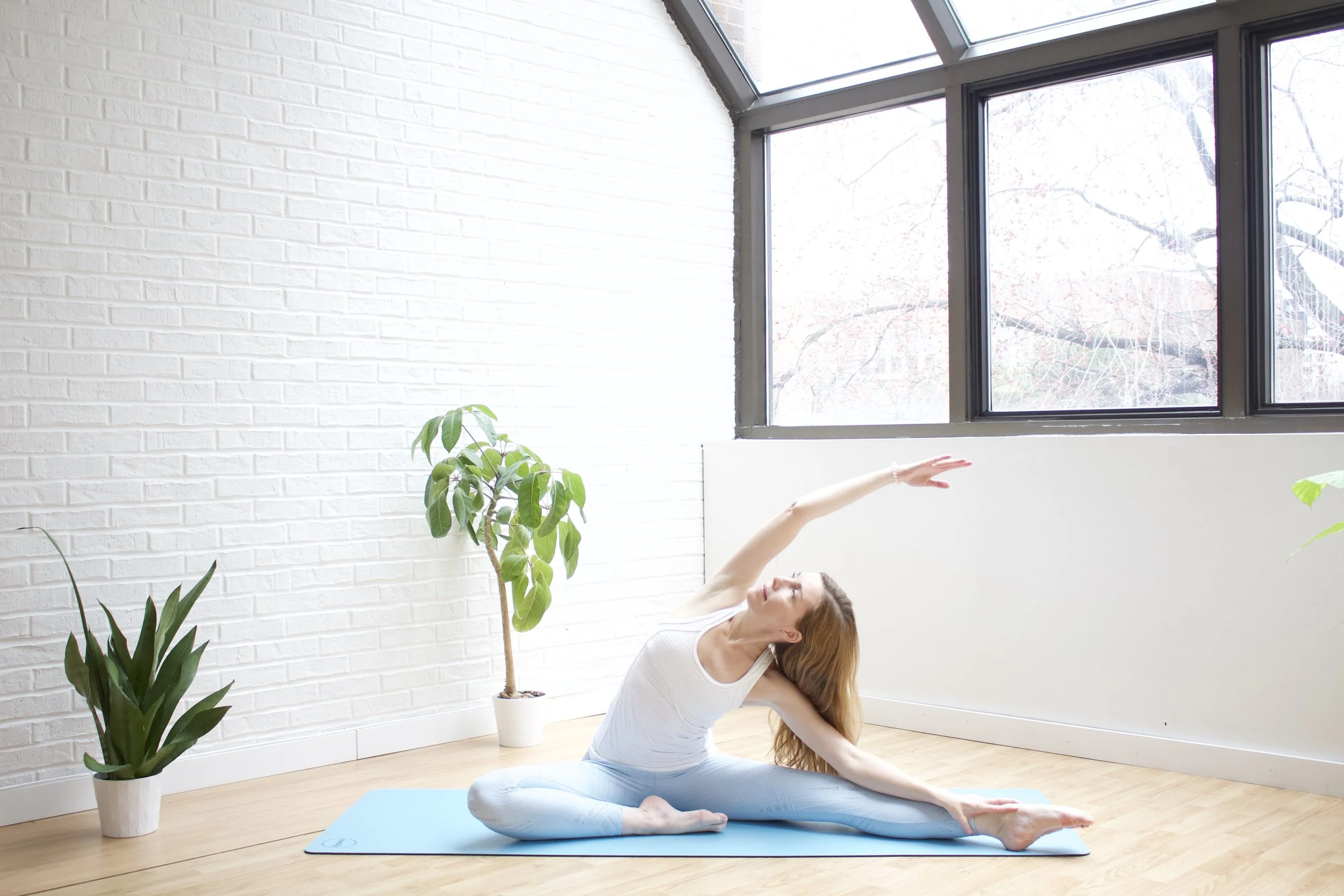
This is one reason why Pilates places such a strong emphasis on breath awareness. Rather than simply strengthening individual muscles, Pilates helps improve the coordination between breathing and movement, allowing the body to create support from the inside out.
How Pilates Can Improve Breathing Patterns
Pilates is uniquely effective at helping people become aware of how they breathe.
Through mindful movement, controlled exercises, and breath-focused instruction, clients learn to:
Improve rib cage mobility
Reduce unnecessary tension in the neck and shoulders
Enhance core activation
Improve posture and alignment
Develop greater body awareness
Support nervous system regulation
Many clients report feeling taller, more relaxed, and more connected to their bodies after just a few sessions.
A Simple Breathing Check-In
The next time you notice tension in your upper body, take a moment to observe your breathing.
Ask yourself:
Can I feel my ribs expanding as I inhale?
Am I breathing mostly into my chest?
Are my shoulders lifting with each breath?
Can I soften my neck, jaw, and shoulders?
Awareness is often the first step toward change.
At Mindful Movement Centre, we believe that breathing is more than just an automatic function, it's a foundation for healthy movement, better posture, and overall wellbeing. After all, even Joe Pilates said “Breathing is the first act of life, and the last. Our very life depends on it.” 😉
If you're looking for Pilates in Toronto, we'd love to help you explore the connection between breath, movement, and long-term health.
Book a private session or join one of our Pilates classes and discover how small changes in the way you breathe can create meaningful changes in the way you feel.
To book, or to learn more about our offerings, click here.